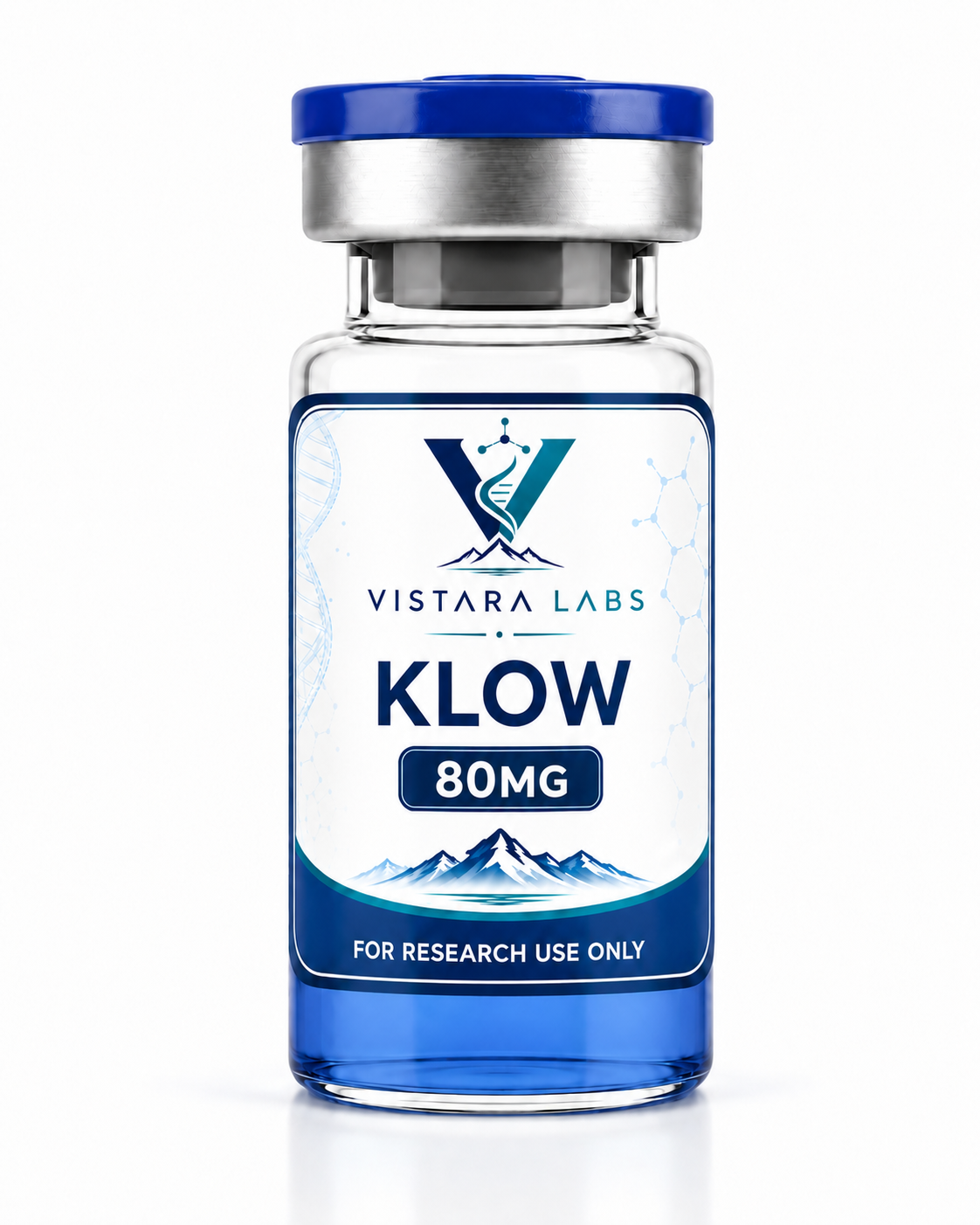
KLOW Blend 80mg
$115
FOR RESEARCH USE ONLY
KLOW Blend is a multi-peptide research blend commonly studied in laboratory settings for its relationship to tissue-response pathways, collagen signalling, inflammatory-response models, and cellular repair research.
This blend is typically associated with research involving structural tissue support, skin and connective tissue models, epithelial integrity, angiogenic response, and peptide-mediated recovery pathways.
Because KLOW combines multiple peptides with different research profiles, it has attracted interest in studies examining how copper-peptide signalling, tissue-repair peptides, cell-migration pathways, and inflammatory-response peptides may interact within the same experimental model.
Final order totals, availability, shipping, and payment instructions are confirmed by email before payment.
Additional Information
KLOW Blend is a multi-component research formulation commonly associated with GHK-Cu, BPC-157, TB-500/TB-4, and KPV. Each component is studied for a different but overlapping area of biological research, making the blend relevant to models involving tissue repair, collagen organization, inflammatory signaling, cellular migration, and epithelial-response pathways.
GHK-Cu is commonly studied for its role in copper-binding activity, collagen signaling, extracellular matrix support, and skin-structure research. It is often examined in laboratory models involving fibroblast activity, tissue remodeling, and structural protein regulation.
BPC-157 is commonly studied in research models involving tissue response, gastrointestinal integrity, angiogenic signaling, fibroblast activity, and connective tissue repair pathways. It has attracted interest in studies involving tendons, ligaments, mucosal tissue, and extracellular matrix organization.
TB-500/TB-4-related research is often focused on actin regulation, cellular migration, vascular response, and wound-response models. In laboratory settings, this component is commonly discussed in relation to cell movement, tissue remodeling, and repair-associated signaling.
KPV is a short tripeptide studied for its relationship to inflammatory-response pathways, epithelial integrity, melanocortin-associated signalling, and gut-related research models. It is often examined in studies involving NF-kB and MAPK inflammatory signaling pathways.
Together, these components make KLOW Blend relevant for research involving skin structure, connective tissue response, inflammatory signaling, gastrointestinal and epithelial models, collagen organization, and multi-peptide interaction studies. As a blend, it should be evaluated according to batch-specific documentation, component profile, and intended research design.
At Vistara Labs, KLOW Blend 80mg is supplied strictly for research use only and is intended for qualified laboratory, analytical, or educational research applications. It is not intended for human or veterinary use. For researchers looking for KLOW Blend, Vistara Labs provides research compounds with a focus on quality, consistency, and transparent product information.
Key Research Areas
• Multi-peptide tissue-response research
• Collagen signaling and extracellular matrix studies
• Skin structure and cosmetic research models
• Connective tissue and structural repair models
• Angiogenic response and vascular signaling research
• Cellular migration and wound-response pathway studies
• Inflammatory-response pathway analysis
• Epithelial integrity and gut-related research models
• Fibroblast activity and matrix remodeling research
• Batch-specific formulation and blend interaction studies
Product Info
Product name: KLOW Blend
Amount: 80mg per vial
Common blend profile: GHK-Cu, BPC-157, TB-500/TB-4, and KPV
Molecular formula: Not applicable to multi-component blend
Molecular weight: Not applicable to multi-component blend
Sequence: Not applicable to multi-component blend
Blend composition: Refer to batch documentation or Certificate of Analysis
Purity: 99%+
Research use: For research use only, not for human or veterinary use
Exact component ratios may vary by batch and should be confirmed by COA