What are peptides?
Small molecules. Essential Signals.
Peptides are short chains of amino acids, the same building blocks that make up proteins. They occur naturally throughout the body and act as biological messengers, helping cells communicate and coordinate specific functions.
From blood sugar and appetite regulation to water balance, immune signalling, and tissue processes, peptides are already part of everyday human biology.
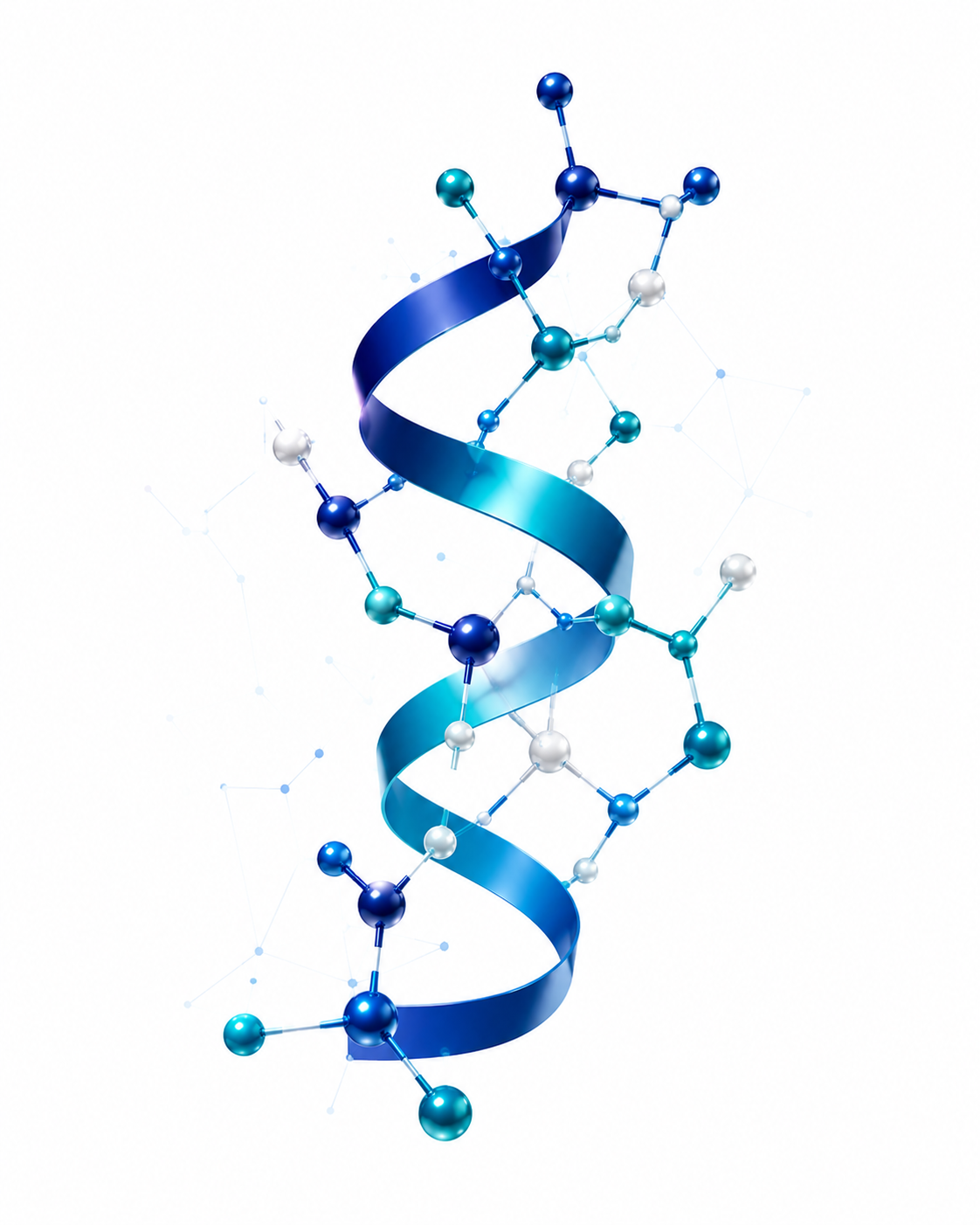
You may be more familiar with peptides than you think
There are several naturally occurring peptides, including insulin, oxytocin, GLP-1, glucagon, and vasopressin.
Peptides are already involved in many essential functions throughout the body, from blood sugar regulation and appetite to cell communication and water balance.
INSULIN: Blood Sugar Regulation
Helps regulate blood glucose by allowing the body to use and store glucose.
OXYTOCIN: Bonding & Reproduction
A naturally occurring peptide hormone involved in childbirth, breastfeeding, and social bonding.
GLP-1: Appetite & Metabolism
Glucagon-like Peptide-1 are naturally occurring peptide hormones involved in appetite and blood-glucose regulation. Medications such as Ozempic and Wegovy act on the GLP-1 receptor.
Peptide chemistry
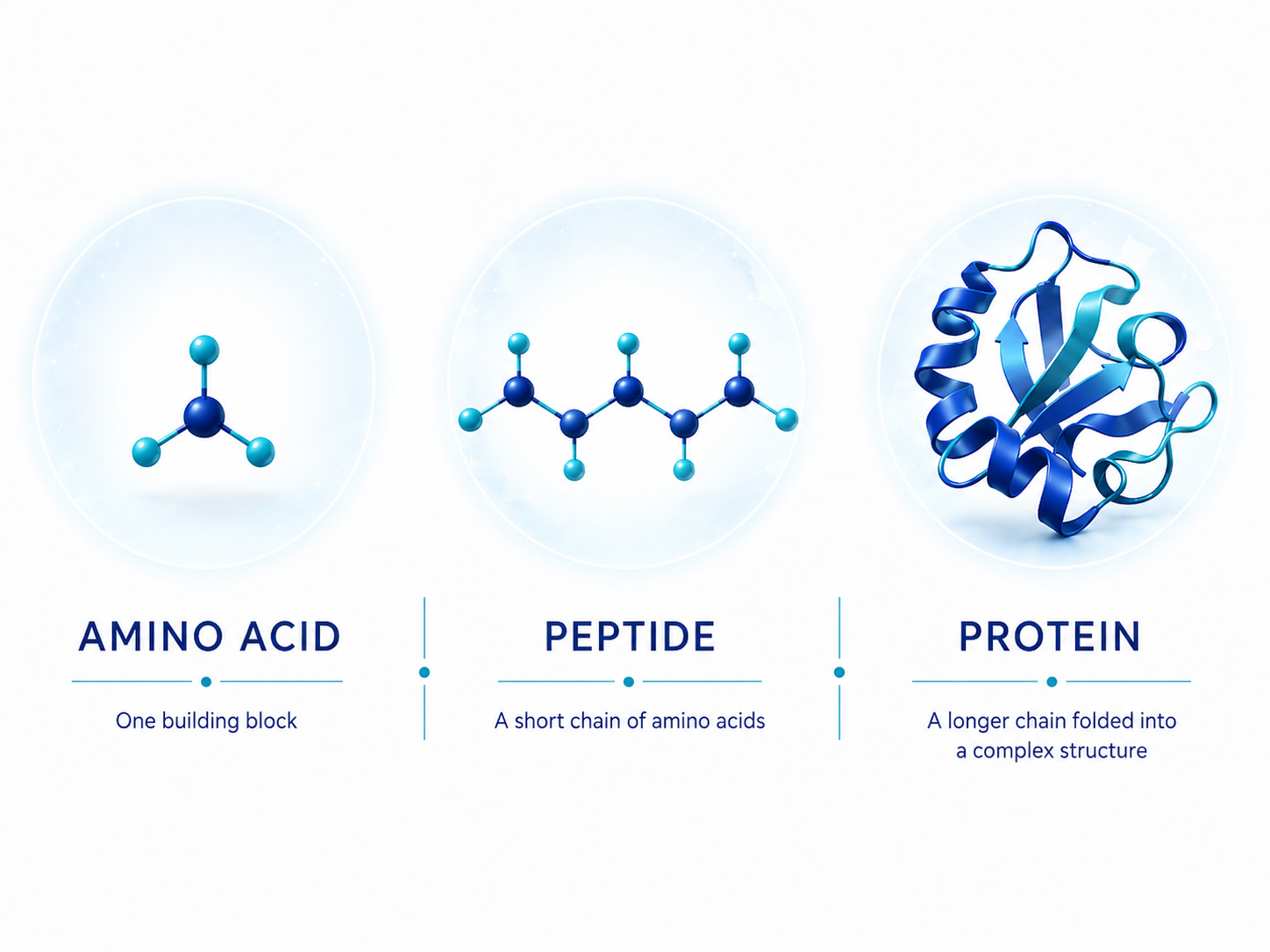
Peptides are made from amino acids. Amino acids join together in specific sequences, forming chains that can interact with biological systems in very different ways.
Think of amino acids as individual building blocks. Connect a few in a specific sequence and you create a peptide. Build a much longer chain and fold it into a complex three-dimensional structure, and you can create a protein.
How peptides work
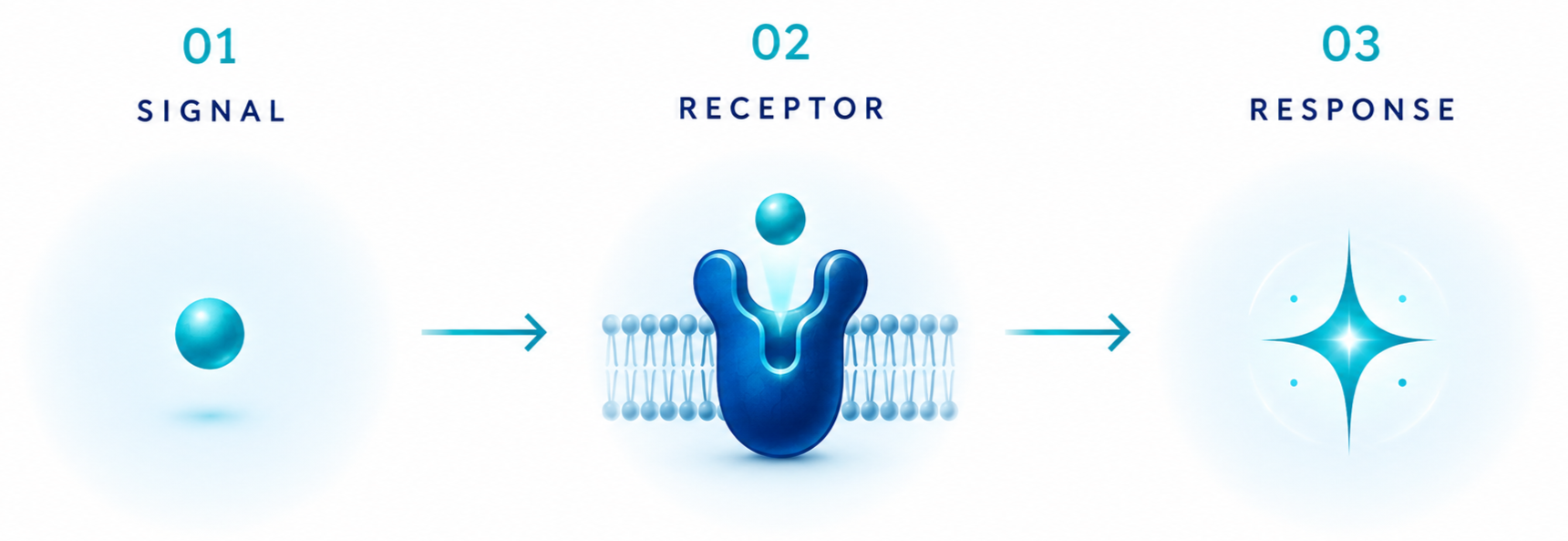
Many peptides function as signalling molecules. Rather than simply becoming part of a cell, they often interact with specific biological targets and help trigger or regulate a response.
1. SIGNAL
A peptide carries a specific biological message.
2. RECEPTOR
The peptide interacts with a compatible target, often a receptor on or within a cell.
3. RESPONSE
That interaction can influence a particular biological process.
Where peptide science shows up
Peptide science is not limited to one field. Peptides are studied and used across medicine, biology, skin science, nutrition, and laboratory research.
Medicine
Insulin is one of the best-known examples of a peptide medicine. Peptide-based therapies are also used and studied in areas including metabolic health, fertility, hormone regulation, and other specialized fields.
Skin Care
Peptides are commonly found in modern skin care formulations and are studied for their roles in cellular signalling, collagen-related processes, skin structure, and repair. GHK-Cu peptide has gained recognition in skin elasticity and tissue repair.
Weight Loss
Peptide-based medications have become widely recognized in weight management for their effects on appetite and blood sugar regulation. Semaglutide (Ozempic) and retatrutide reduce hunger, increase fullness, and support weight loss.
Cognition
Peptides are increasingly recognized in cognitive research for their roles in focus, memory, and brain signalling. Peptides such as Semax have gained attention for their association with mental clarity, cognitive performance, and neuroprotective pathways.
Explore our peptides